
#03027 Astra Gnome (USA, 1956)
Scale 1/43
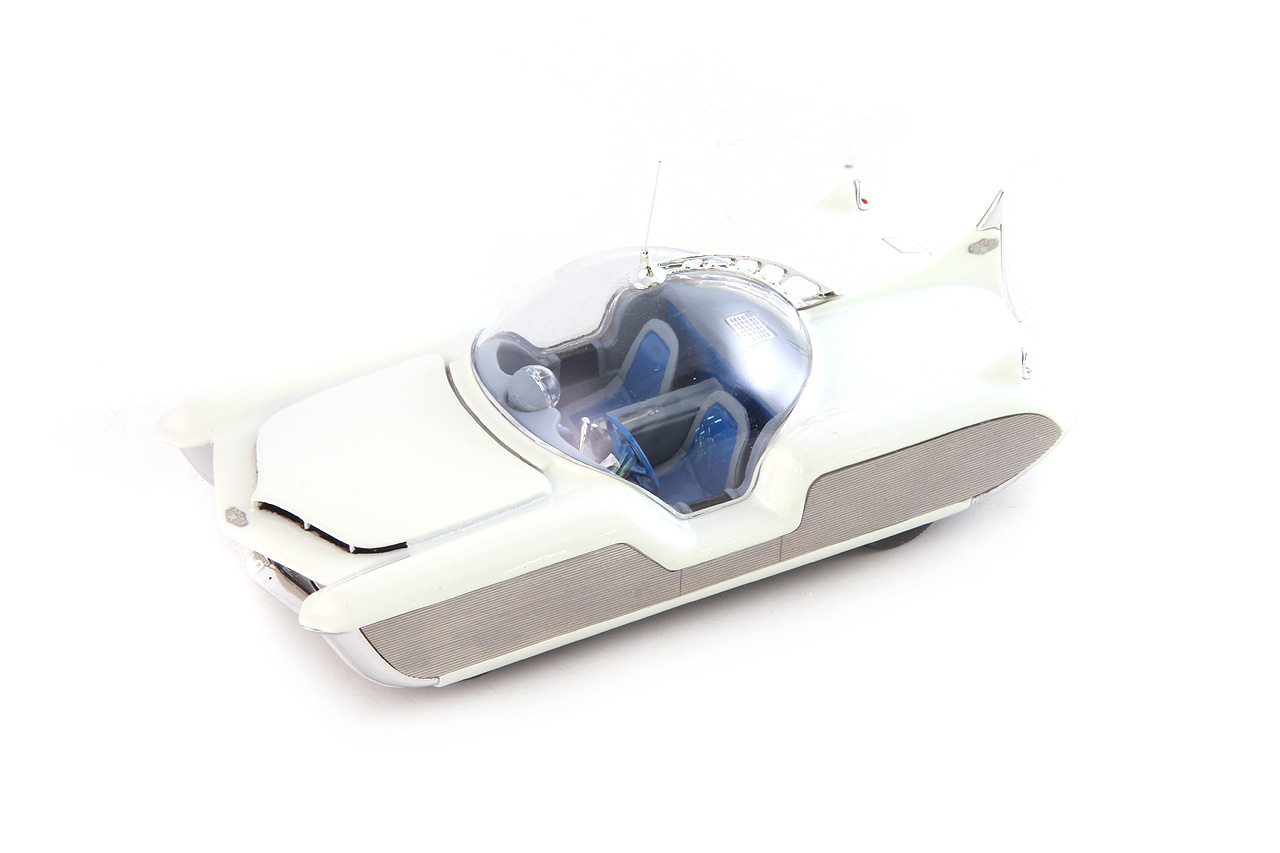

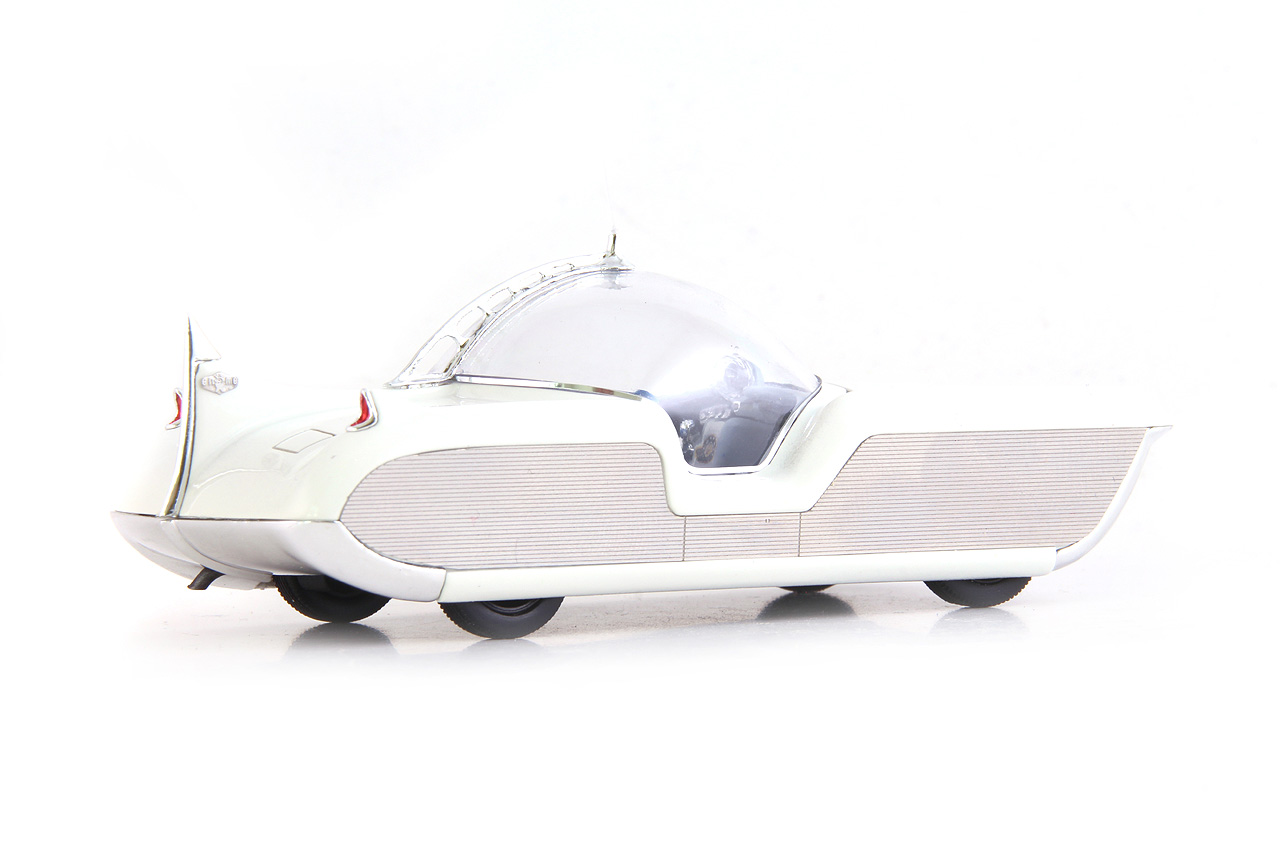


1:43 Astra Gnome
113,95 €
inkl. MwSt, zzgl. Versandkosten
- verfügbar/ available
- 3 - 5 Tage Lieferzeit/ ships within 3 - 5 days
other languages


Deutsch
45 Jahre voraus in die Zukunft geblickt!
Der im Jahr 1917 in Gloversville, New York, geborene Richard Arbib studierte Design und fand eine Arbeitsstelle bei General Motors, wo er mit Stardesigner Harley Earl zusammenarbeitete. Nach dem Zweiten Weltkrieg engagierte ihn das Unternehmen `Henney Automobile Company`, wo er von 1951 bis 1954 seine Träume in Autos umsetzte. Der Packard Super Station Wagen mit seinem leicht gekrümmten Rückfenster geht auf die Idee des damals 37jährigen zurück.
In den 1950er Jahren plante er zudem die Realisierung eines Autos, wie er dachte, dass es im Jahr 2000 aussehen würde! Unter dem Namen „Astro-Gnome - time and space car“ realisierte er seine Vorstellung, die auf einem herkömmlichen Nash, Typ Metropolitan - auch „Baby-Nash“ genannt - Baujahr 1955 basierte. Der Designer legte sein Hauptaugenmerk auf die Optik und hier auf die halbrunde Dachabdeckung, die den Passagieren einen Rundumblick bot und im Inneren hatte er einen Klangraum nachempfunden. Da der Wagen in seinen Abmessungen ein wenig breiter als normale Straßenautos der Kleinwagenklasse war, fiel auch der Innenraum wesentlich größer dimensioniert aus.
Das Zukunftsauto wurde von der `Richard Arbib Company inc` auf Initiative der `AMA` - American Motor Corporation - entwickelt und die handwerkliche Arbeit von dem New Yorker Andrew Mazzaro ausgeführt. Der gesamte Prozess soll nach seinerzeitigen Angaben nur vier Monate in Anspruch genommen haben.
Auf der `New York international Auto Show` 1956 bekamen die Messebesucher das Zukunftsszenario zum ersten und einzigen Mal real zu sehen, verschwand dann in der Versenkung und wurde erst 1980 wiederentdeckt.

English
Looking 45 years ahead into the future!
Richard Arbib was born in Gloversville, New York, in 1917. He studied design and found a job at General Motors, where he worked with star designer Harley Earl. After World War II, the Henney Automobile Company hired him, and from 1951 to 1954, he turned his dreams into cars. The Packard Super Station Wagon, with its slightly curved rear window, was based on an idea by the 37-year-old Arbib.
In the 1950s, he planned to build a car that would resemble the cars of the year 2000. He realized his vision under the name "Astro-Gnome — time and space car," based on a conventional 1955 Nash Metropolitan, also known as the "Baby Nash." Arbib focused primarily on the car's appearance, particularly the semi-circular roof covering that offered passengers a panoramic view. He also recreated a spacious interior. Since the car was slightly wider than normal small cars, the interior was considerably larger.
The car of the future was developed by the Richard Arbib Company, Inc., at the request of the American Motors Corporation (AMC) and crafted by Andrew Mazzaro of New York. According to reports at the time, the entire process took only four months.
Visitors to the 1956 New York International Auto Show got their first and only real glimpse of this vision of the future. The car then disappeared into obscurity and was only rediscovered in 1980.

Français
Une vision futuriste des années 50 pour les 45 prochaines années !
Richard Arbib est né à Gloversville, dans l'État de New York, en 1917. Après des études de design, il est embauché par General Motors, où il travaille avec le designer vedette Harley Earl. À la fin de la Seconde Guerre mondiale, la Henney Automobile Company l'engage et, de 1951 à 1954, il concrétise ses rêves en créant des voitures. La Packard Super Station Wagon, avec sa lunette arrière légèrement incurvée, est née d'une idée d'Arbib, alors âgé de 37 ans.
Dans les années 1950, il projette de construire une voiture qui ressemblera à celles de l'an 2000. Il réalise sa vision sous le nom d'«Astro-Gnome – voiture du temps et de l'espace», basée sur une Nash Metropolitan de 1955, également connue sous le nom de « Baby Nash ». Arbib se concentre principalement sur l'esthétique de la voiture, notamment sur le toit semi-circulaire offrant aux passagers une vue panoramique. Il conçoit également un intérieur spacieux. Comme la voiture était légèrement plus large que les petites voitures habituelles, son habitacle était considérablement plus spacieux.
Cette voiture du futur fut développée par la Richard Arbib Company, Inc., à la demande de l'American Motors Corporation (AMC), et conçue par Andrew Mazzaro, un New-Yorkais. D'après les informations de l'époque, le processus complet n'eut besoin que de quatre mois.
Les visiteurs du Salon international de l'automobile de New York de 1956 purent admirer pour la première et unique fois cette vision du futur. La voiture tomba ensuite dans l'oubli et ne fut redécouverte qu'en 1980.

Italiano
Guardando avanti di 45 anni nel futuro!
Richard Arbib nacque a Gloversville, nello stato di New York, nel 1917. Studiò design e trovò lavoro alla General Motors, dove collaborò con il celebre designer Harley Earl. Dopo la Seconda guerra mondiale, fu assunto dalla Henney Automobile Company e, tra il 1951 e il 1954, trasformò i suoi sogni in automobili. La Packard Super Station Wagon, con il suo lunotto posteriore leggermente curvato, nacque da un’idea del trentasettenne Arbib.
Negli anni ’50 progettò un’auto che avrebbe dovuto assomigliare alle vetture dell’anno 2000. Realizzò la sua visione sotto il nome di “Astro-Gnome – time and space car”, basandola su una convenzionale Nash Metropolitan del 1955, conosciuta anche come “Baby Nash”. Arbib si concentrò principalmente sull’aspetto estetico, in particolare sulla copertura del tetto a forma semicircolare che offriva ai passeggeri una vista panoramica. Ricreò inoltre un abitacolo ampio e confortevole. Poiché l’auto era leggermente più larga rispetto alle normali utilitarie, l’interno risultava notevolmente più spazioso.
L’auto del futuro fu sviluppata dalla Richard Arbib Company, Inc. su richiesta della American Motors Corporation (AMC) e realizzata da Andrew Mazzaro di New York. Secondo i resoconti dell’epoca, l’intero processo richiese solo quattro mesi.
I visitatori del Salone Internazionale dell’Automobile di New York del 1956 ebbero la loro prima — e unica — vera occasione di ammirare questa visione del futuro. L’auto cadde poi nell’oblio e fu riscoperta solo nel 1980.
