
#07030 Ferrari 312 T4A (Italy, 1979)
Scale 1/43
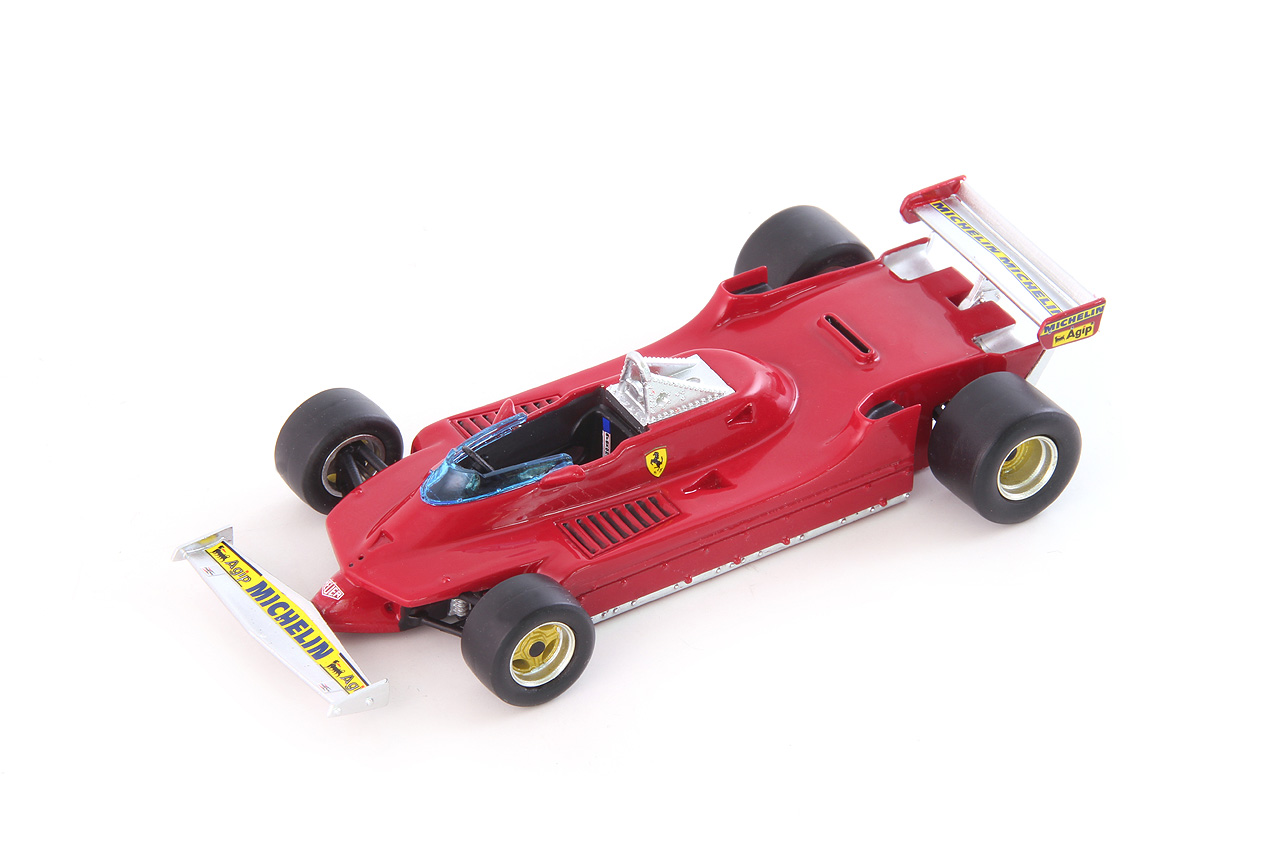
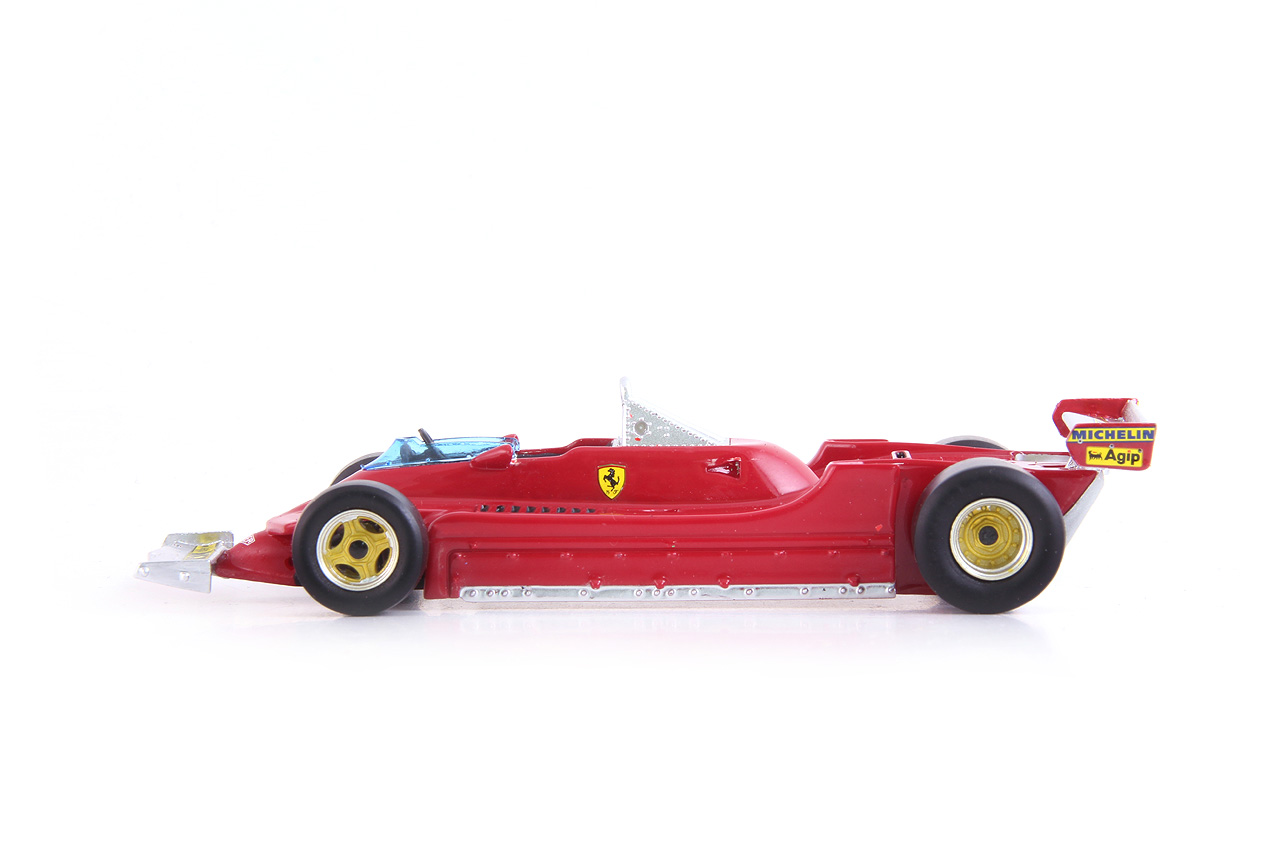
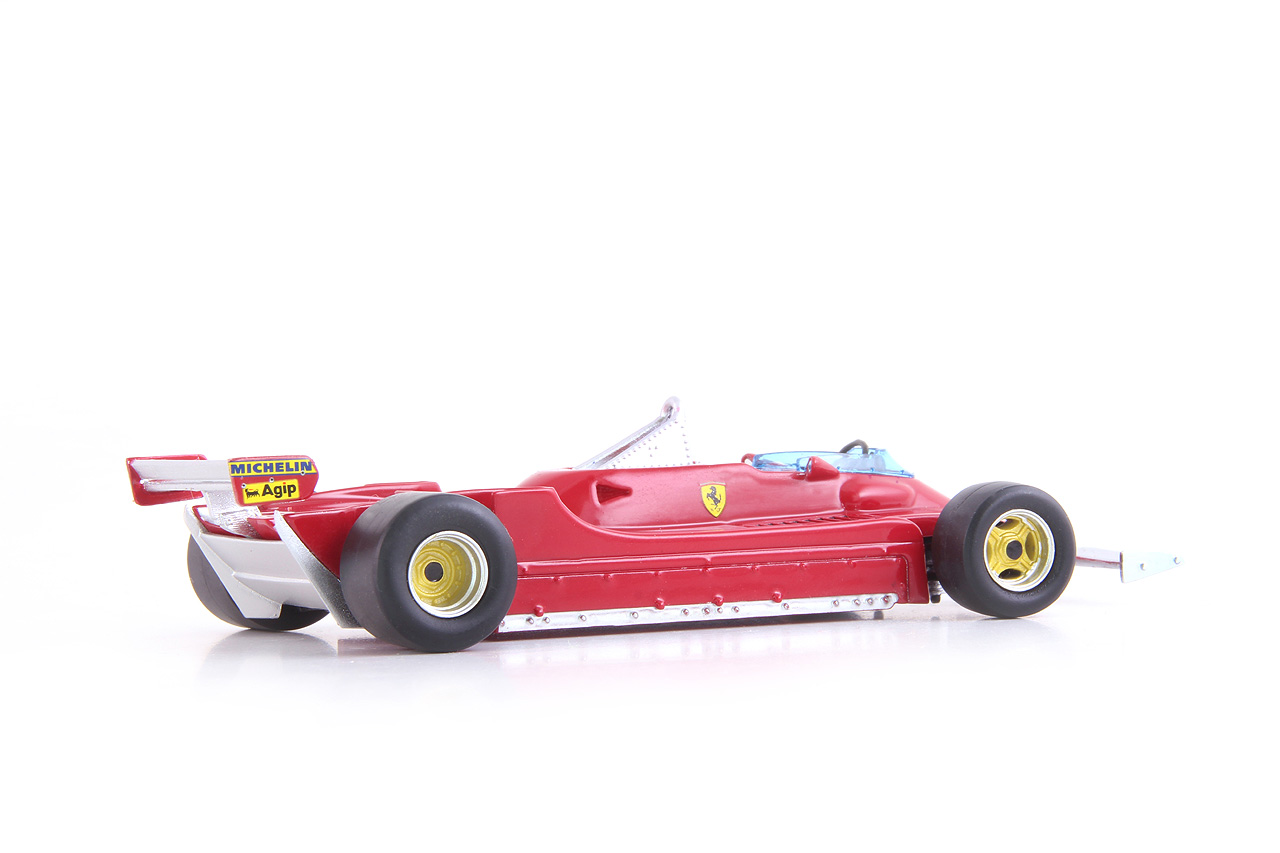


1:43 Ferrari 312 T4A
117,95 €
inkl. MwSt, zzgl. Versandkosten
- verfügbar/ available
- 3 - 5 Tage Lieferzeit/ ships within 3 - 5 days
other languages


Deutsch
Aus einer glorreichen Ära
Ferrari-Ingenieur Mauro Forghieri zeichnete verantwortlich für den erfolgreichen Rennwagen 312T4, der 1979 nicht nur den Weltmeistertitel gewann, sondern auch die Vizeweltmeisterschaft und die Konstrukteurs-WM. Vor allem der Begriff „Ground Effect“ prägte in diesem Jahr das WM-Geschehen. Zunächst von Lotus umgesetzt, konstruierten die Ferrari-Techniker den Unterboden ebenfalls mit dieser für den Autorennsport so wichtigen Erkenntnis. Taktisch passend dazu wählte Mauro Forghieri die Radaufhängungen so, dass der unter den Rennwagen gelangte Fahrtwind auf so wenig Widerstand wie nur möglich stieß. Um die optimale Umsetzung zu erzielen, experimentierten die Techniker mit verlängerten Heckversionen und verschiedenen Aufbauten, die auch auf der Rennstrecke getestet wurden. Eine diese Prototypen zeigt das umgesetzte Modell.
Mit Beginn der Formel 1 Saison war der neue Wagen noch nicht ausgereift, doch ab dem dritten Lauf saßen die beiden Werksfahrer Scheckter und Villeneuve im Cockpit des neuen Formel 1 Renners und zeigten der Konkurrenz eindrucksvoll, wie erstklassig die neue Konstruktion war. Von den beiden Scuderia-Piloten erwies sich Gilles Villeneuve im Laufe der Saison als der unbeständigere, denn gute Platzierungen wechselten sich mit schlechten Ergebnissen und Ausfällen ab, während Jody Scheckter kontinuierlich auf vorderen Rängen Punkte addierte. Am Ende der Saison reichte es für den Südafrikaner mit einer Gesamtzahl von 51 Punkte zum Weltmeistertitel - er hatte damit exakt vier Zähler mehr als Gilles Villeneuve auf dem Konto.

English
From a Glorious Era
Ferrari Engineer Mauro Forghieri was responsible for the successful 312T4 racing car, which not only won the world championship title in 1979, but also the runner-up world championship and the constructors’ world championship. Above all, the term ‘ground effect’ shaped the World Cup events this year. Initially implemented by Lotus, the Ferrari technicians also designed the underbody with this finding, which is so important for car racing. Tactically, Mauro Forghieri chose the wheel suspensions in such a way that the airstream that got under the racing car met with as little resistance as possible. In order to achieve the optimal implementation, the technicians experimented with extended rear versions and various bodies, which were also tested on the race track. One of these prototypes shows the implemented model.
At the beginning of the Formula 1 season, the new car was not yet fully developed, but from the third race onwards, the two factory drivers Scheckter and Villeneuve sat in the cockpit of the new Formula 1 racer and impressively showed the competition how first-class the new design was. Of the two Scuderia driver’s, Gilles Villeneuve proved to be the more inconsistent over the course of the season, as good placings alternated with poor results and retirements, while Jody Scheckter continuously added points in the front ranks. At the end of the season, the South African won the world championship title with a total of 51 points – exactly four points more than Gilles Villeneuve.

Français
D'une époque glorieuse
Mauro Forghieri, ingénieur chez Ferrari, est à l'origine de la 312T4, une voiture de course couronnée de succès qui a non seulement remporté le titre de championne du monde en 1979, mais aussi la vice-championne du monde et le championnat du monde des constructeurs.
L'effet de sol a surtout influencé les épreuves de la Coupe du monde cette année-là. Initialement mis en œuvre par Lotus, les techniciens de Ferrari ont également conçu le soubassement en s'appuyant sur cette découverte, essentielle en compétition automobile. Sur le plan tactique, Mauro Forghieri a choisi les suspensions de manière que le flux d'air pénétrant sous la voiture rencontre le moins de résistance possible. Pour une mise en œuvre optimale, les techniciens ont expérimenté des versions arrière allongées et différentes carrosseries, qui ont également été testées sur circuit. L'un de ces prototypes illustre le modèle mis en œuvre.
Au début de la saison de Formule 1, la nouvelle monoplace n'était pas encore totalement développée, mais dès la troisième course, les deux pilotes d'usine Scheckter et Villeneuve ont pris place dans le cockpit de la nouvelle monoplace et ont démontré de manière impressionnante à la concurrence l'excellence de sa nouvelle conception. Des deux pilotes de la Scuderia, Gilles Villeneuve s'est montré le plus irrégulier tout au long de la saison, alternant bons classements, mauvais résultats et abandons, tandis que Jody Scheckter a continuellement marqué des points aux avant-postes. À la fin de la saison, le Sud-Africain a remporté le titre de champion du monde avec un total de 51 points, soit exactement quatre points de plus que Gilles Villeneuve.

Italiano
Da una grande era
L’ingegnere Ferrari Mauro Forghieri fu il responsabile della riuscita monoposto 312T4, che non solo vinse il titolo mondiale nel 1979, ma conquistò anche il secondo posto nella classifica piloti e il campionato costruttori. In quell’anno, il termine "effetto suolo" divenne centrale negli eventi del Mondiale. Inizialmente introdotto dalla Lotus, anche i tecnici Ferrari progettarono il fondo della vettura tenendo conto di questa scoperta fondamentale per le corse automobilistiche.
Dal punto di vista tattico, Mauro Forghieri scelse delle sospensioni delle ruote tali da offrire la minore resistenza possibile all’aria che passava sotto la monoposto. Per raggiungere un’implementazione ottimale dell’effetto suolo, i tecnici sperimentarono diverse configurazioni posteriori allungate e varianti di carrozzeria, testate direttamente in pista. Uno di questi prototipi mostra il modello così sviluppato.
All’inizio della stagione di Formula 1, la nuova vettura non era ancora del tutto sviluppata, ma a partire dalla terza gara, i due piloti ufficiali Scheckter e Villeneuve si misero al volante della nuova monoposto, dimostrando in modo impressionante alla concorrenza la qualità del nuovo progetto. Tra i due piloti della Scuderia, Gilles Villeneuve si rivelò il più incostante nel corso della stagione: alle ottime prestazioni alternava risultati deludenti e ritiri, mentre Jody Scheckter andò costantemente a punti nelle posizioni di vertice. Alla fine della stagione, il sudafricano vinse il titolo mondiale con un totale di 51 punti – esattamente quattro in più rispetto a Gilles Villeneuve.
